


Small business payroll in Orlando changes significantly as a company moves from self-employment to hiring staff, electing S-corporation status, or managing a 50-250+ employee workforce. The right payroll process should match the business structure, support accurate tax reporting and filings, and scale with more employees, pay types, benefits, locations, and reporting needs.
Most business owners do not launch a company because they are excited about payroll tax schedules. They are focused on customers, hiring, cash flow, and keeping operations moving. Payroll usually feels manageable at first, but each new stage of growth adds rules, deadlines, approvals, and employee questions that a basic process may not be built to handle.
That is why small business payroll in Orlando is not a single, one-size-fits-all problem. A sole proprietor paying estimated taxes has very different responsibilities from an S-corporation owner running payroll, and both are dealing with a very different system than a company with 150 employees. Understanding what changes at each stage makes it easier to choose the right level of payroll support before errors become expensive.
- How do payroll obligations change as an Orlando business grows?
- How do self-employed business owners handle payroll taxes?
- What payroll taxes do Orlando employers need to manage?
- How does S-corp payroll work for an owner-employee?
- What changes when a business reaches 50-250+ employees?
- When should an Orlando business use a payroll company?
- Choose payroll support that fits every stage of growth
- Frequently Asked Questions
- External Research & Authority Sources
How do payroll obligations change as an Orlando business grows?
Payroll complexity tends to grow faster than headcount. A business may start with one owner, then hire its first employee, add managers and departments, introduce bonuses or commissions, offer health and retirement benefits, and eventually employ people across multiple locations or states. Each step creates new information that has to be collected, approved, calculated, reported, and stored accurately.
The important question is not simply, “How many employees do we have?” It is, “How many payroll variables are we managing?” A 25-person company with hourly staff, overtime, multiple pay rates, garnishments, and benefit deductions can have a more complicated payroll than a larger organization with one salary structure. A strong payroll system should be designed around the actual workforce, not just the employee count.
How do self-employed business owners handle payroll taxes?
For a sole proprietor, the phrase “payroll for myself” can be misleading. Sole proprietors generally are not employees of their own sole proprietorship and do not issue themselves a W-2. Instead, they typically take owner draws and report business profit on their individual tax return. Self-employment tax is then calculated on qualifying net earnings.
The IRS states that the self-employment tax rate is 15.3%, consisting of 12.4% for Social Security and 2.9% for Medicare, subject to applicable limits and additional Medicare tax rules. Because there is no employer withholding tax from a self-employed owner’s paycheck, estimated tax payments may be required during the year. The IRS uses Form 1040-ES to help individuals calculate estimated income and self-employment taxes.
This is where planning matters. An owner should understand the difference between business cash available to withdraw and cash that should be reserved for taxes. Estimated payments are generally made in four payment periods, and underpaying or paying late can result in penalties. For an Orlando entrepreneur, building a repeatable tax-payment routine early can prevent a year-end surprise as revenue increases.
What payroll taxes do Orlando employers need to manage?
Once a business hires employees, payroll becomes a formal employer responsibility. Federal obligations can include income tax withholding, Social Security and Medicare taxes, federal unemployment tax, federal tax deposits, quarterly or annual employment tax returns, and year-end wage reporting. IRS Publication 15 explains that many employers file Form 941 quarterly, use Form 940 for federal unemployment tax, and furnish Form W-2 to employees.
Florida does not impose an individual state income tax, but that does not make employer payroll compliance simple. Liable Florida employers may have reemployment tax responsibilities. The Florida Department of Revenue assigns rates and requires employers to report taxable wages and pay the applicable employer-funded reemployment tax. For 2026, the Department states that rates range from 0.1% to 5.4% on the first $7,000 of annual wages per employee, depending on the employer’s assigned rate.
Common payroll problems are often small at first and costly later. Watch for:
- Worker classification decisions that do not match the actual working relationship.
- Missed federal deposits or Florida reemployment tax filings because deadlines are tracked manually.
- Incorrect overtime, bonus, deduction, or benefit calculations that repeat across multiple payroll cycles.
- Year-end W-2 totals that do not reconcile cleanly with quarterly payroll tax filings.
- Payroll knowledge concentrated in one person, creating risk during leave, turnover, or an emergency.
A professional payroll process should create clear approvals, reliable records, and a documented filing calendar. Software can automate calculations, but the business still needs accurate setup, timely inputs, and oversight.
How does S-corp payroll work for an owner-employee?
S-corporation payroll adds another layer because an owner who performs services for the corporation is generally treated as an employee. The IRS says an S corporation must pay reasonable compensation to a shareholder-employee for services provided before making non-wage distributions to that shareholder-employee.
There is no single “safe” salary percentage that works for every S corporation. Reasonable compensation depends on the facts and circumstances, including training and experience, duties, time devoted to the business, comparable pay for similar work, and the company’s revenue-producing activities. The goal is to establish a salary that can be supported by the owner’s actual role, not simply to minimize payroll taxes.
Once compensation is established, the payroll itself should be consistent. The shareholder-employee’s wages should flow through regular payroll, applicable federal taxes should be withheld and deposited, quarterly payroll returns should reconcile to the payroll records, and the year-end W-2 should match what was actually paid. A tax strategy is only useful when the payroll records support it.
What changes when a business reaches 50-250+ employees?
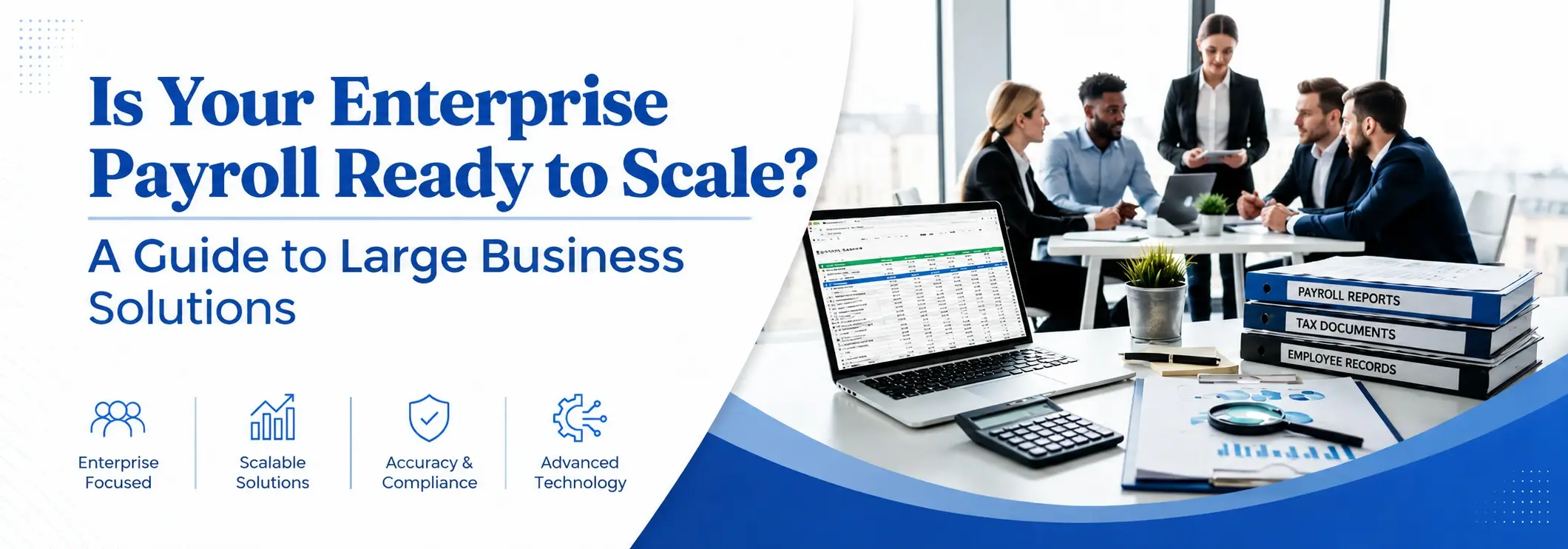
At 50 employees and beyond, payroll is usually no longer just a payment function. It becomes part of a broader workforce system that may connect timekeeping, scheduling, benefits, HR administration, workers’ compensation, accounting, leave tracking, and management reporting. More employees create more transactions, but the bigger challenge is the number of exceptions that must be handled correctly every pay period.
A growing employer may need to manage multiple hourly rates, salaried staff, shift differentials, bonuses, commissions, garnishments, benefit deductions, PTO accruals, department or location codes, and employees working in more than one state. Managers also need faster access to labor-cost and overtime reports so payroll data can support operational decisions, not merely satisfy a payday deadline.
At this stage, one setup error can affect dozens of employees. A payroll solution for 50-250+ employees should therefore provide structured approvals, secure employee access, dependable integrations, audit-friendly records, and responsive support. The goal is not only to process more checks; it is to create a process that stays controlled as the organization becomes more complex.
When should an Orlando business use a payroll company?
The best time to evaluate payroll services is before the current process starts breaking. Waiting for a tax notice, repeated employee complaints, or a missed payroll creates unnecessary pressure. A business may be ready for outside support when payroll consumes too much owner or management time, tax responsibilities are difficult to track confidently, or the existing software no longer matches the workforce.
Signs that professional payroll services for a small business in Orlando may make sense include rapid hiring, a new location, S-corporation payroll, employees in multiple states, added benefit plans, frequent corrections, limited reporting, or a need to connect payroll with timekeeping and HR. The right Orlando payroll company should explain who handles each filing, how deposits can be confirmed, what support is available, and how the system will scale.
Payroll Partners describes its service model as local payroll support backed by a dedicated specialist, online access to payroll reports and returns, quarterly and annual payroll filings, and related HR, benefits, and time-and-attendance solutions. That combination can be especially useful for businesses that want technology without losing access to a knowledgeable support team.
Choose Payroll Support That Fits Every Stage of Growth
The payroll needs of an Orlando business can change dramatically over time. A self-employed owner may need a disciplined estimated-tax process; a small employer needs accurate withholding, deposits, filings, and wage reporting; an S-corporation shareholder-employee needs supportable compensation and consistent payroll records; and a 50-250+ employee company needs integrated systems, reporting, and controls.
Payroll Partners supports Florida businesses with payroll processing, time and attendance, HR management, employee benefits, and related business solutions. If your current process is becoming harder to manage, reviewing the setup now can help you create a payroll operation that is more accurate, visible, and ready for the next stage of growth.
Reduce the time your team spends managing payroll details and build a more reliable process for taxes, timekeeping, HR, benefits, and reporting. Payroll Partners can help you choose a solution that fits your current business structure while giving you the support and scalability needed as your Orlando workforce grows.
Does a self-employed owner put themselves on payroll?
Usually not if the business is a sole proprietorship. Sole proprietors generally take owner draws rather than employee wages and calculate income and self-employment taxes through their individual return and estimated tax process.
What payroll taxes does a Florida small business pay?
Depending on the business and workforce, employer obligations can include federal income tax withholding, Social Security and Medicare taxes, FUTA, federal payroll tax deposits and returns, and Florida reemployment tax. The exact requirements depend on the employer’s circumstances.
How much salary should an S-corp owner pay themselves?
There is no universal percentage or fixed amount. The IRS requires reasonable compensation for shareholder-employees who provide services, and the amount should be supportable based on duties, experience, time worked, comparable compensation, and other facts.
When should a growing company outsource payroll?
Consider outside support when payroll is taking too much management time, corrections are frequent, the company adds locations or states, benefits become more complex, reporting is limited, or the internal team is no longer confident it can manage every filing and deadline.
What should an Orlando payroll company provide?
Look for reliable payroll processing, clear tax-filing responsibilities, secure employee access, useful management reporting, integration with timekeeping or HR systems, responsive support, and the ability to scale with additional employees, locations, and pay requirements.
External Research & Authority Sources
- Internal Revenue Service, Self-Employment Tax (Social Security and Medicare Taxes)
- Internal Revenue Service, Estimated Tax / Form 1040-ES Guidance
- Internal Revenue Service, Publication 15 (2026), Employer’s Tax Guide
- Internal Revenue Service, S Corporation Compensation and Medical Insurance Issues
- Florida Department of Revenue, Reemployment Tax Rate Information