

Enterprise payroll is scalable when it can handle more employees, locations, pay structures, approvals, and reporting needs without creating more manual work or increasing error risk. Large Business Payroll Services can help growing organizations standardize payroll processing, improve visibility, and support expansion while preserving employer oversight.
A payroll process that worked for 20 employees may feel very different at 100, 250, or more. Growth introduces new pay structures, managers, locations, approvals, reporting needs, and compliance considerations. The question is no longer simply whether payroll runs. It is whether the process can keep running accurately and efficiently as the organization changes.
That is the real meaning of payroll scalability. A scalable process should absorb added complexity without forcing the HR or finance team to rely on more spreadsheets, more last-minute corrections, or more manual work every pay period.
Table of Contents
- What does scalable enterprise payroll actually mean?
- What are the signs your payroll process is struggling to scale?
- Why does payroll become more complex as an organization grows?
- How does payroll scalability affect HR and finance teams?
- What should scalable payroll technology and reporting provide?
- When should a business consider a Large Payroll Processing Company?
- How can Corporate Payroll Processing Services support long-term growth?
- Build a Payroll Process That Can Grow With Your Business
- Frequently Asked Questions
- External Research & Authority Sources
What does scalable enterprise payroll actually mean?
Scalable enterprise payroll is a payroll process that can expand with the workforce without becoming harder to control. Headcount is only one part of the equation. A growing organization may add different compensation structures, multiple locations, new managers, varied pay schedules, bonuses, commissions, deductions, and reporting requirements.
A scalable system creates repeatable workflows for those moving parts. Changes follow defined approval steps, employee and payroll data remain organized, reports are available when leadership needs them, and the process does not depend on one person remembering every exception.
For larger organizations, the goal is not simply faster payroll. It is a process that remains dependable as the business becomes more complex.
What are the signs your payroll process is struggling to scale?
Payroll rarely fails all at once. More often, the warning signs appear gradually. A process that once took a few hours begins consuming a full day or more. Payroll staff spend increasing amounts of time checking exceptions, correcting time records, or answering questions that should be resolved through clearer workflows. Common warning signs include:
- Payroll takes longer to prepare or review than it did previously.
- Manual spreadsheets or side calculations are needed to complete each run.
- Managers repeatedly submit corrections after payroll data has been collected.
- Employee questions about pay, deductions, or statements are increasing.
- Reports for departments, locations, or labor costs require extra manual work.
- The business has no reliable backup when a key payroll employee is unavailable.
These issues do not automatically mean the payroll process is broken. They often mean the organization has outgrown the structure that worked at an earlier stage.
Why does payroll become more complex as an organization grows?
Growth creates payroll complexity because each new layer of the business creates new information that must be collected, approved, calculated, documented, and reported. One department may use hourly employees with overtime, another may have salaried staff, and a sales team may have commissions or incentive pay. Multiple locations can add different managers and approval workflows.
Growth may also create multi-state payroll considerations when employees work in different jurisdictions. Tax registrations, wage-and-hour requirements, and reporting obligations can depend on where employees perform their work. A payroll process built around a single location and one pay structure may need significant changes when those conditions expand.
This is why adding employees does not simply add more paychecks. It can add more exceptions, more decision points, and more opportunities for inconsistent data.
How does payroll scalability affect HR and finance teams?
When payroll systems do not scale, internal teams absorb the difference. HR may spend more time correcting time records, researching employee questions, or gathering missing information. Finance may spend more time reconciling payroll totals, reviewing tax liabilities, or preparing labor-cost reports.
The impact is easy to underestimate because the additional work is often spread across several people. Ten extra minutes here and thirty minutes there can become a substantial administrative burden over the course of every payroll cycle.
A scalable process should reduce unnecessary handoffs and make responsibilities clearer. Payroll staff still need oversight, but they should not have to rebuild the process every time the organization changes.
What should scalable payroll technology and reporting provide?
Technology matters most when it supports a well-defined payroll workflow. Large organizations should be able to handle employee changes, payroll approvals, reporting, and employee access without relying on disconnected manual processes.
Important capabilities may include secure employee self-service, direct deposit, payroll registers, tax-liability reports, department or location reporting, year-to-date summaries, and controlled access for different administrators. The right setup depends on the organization, but leadership should be able to see what happened in payroll without waiting for someone to rebuild the numbers manually.
Payroll Partners currently positions its large-business solutions for organizations with 50-250+ employees and describes integrated payroll systems intended to grow with the organization. Its broader business payroll services also include tax calculation and filing support, direct deposit, employee self-service, and automated reporting.
When should a business consider a Large Payroll Processing Company?
A business does not need to wait for a serious payroll problem before evaluating outside support. Conversations with a Large Payroll Processing Company can be useful when internal teams are spending too much time on recurring administration or when the current technology no longer matches the complexity of the workforce.
Triggers may include rapid hiring, additional locations, multiple pay structures, recurring corrections, new reporting requirements, or limited internal payroll expertise. The decision should focus on whether a provider can create a more consistent process while giving the employer the visibility and controls it still needs.
Outsourcing also does not eliminate employer responsibility. The IRS notes that employers generally remain responsible for federal employment tax obligations when payroll duties are outsourced, subject to the specific third-party arrangement. That makes transparency, reporting, and clear responsibilities important when selecting a provider.
How can Corporate Payroll Processing Services support long-term growth?
The strongest Corporate Payroll Processing Services do more than process a larger number of checks. They provide a framework that can support additional employees, departments, locations, and reporting needs without creating a separate workaround for every change.
For growing organizations, that may mean standardized approval processes, clearer reporting, more consistent employee access, and a support structure that does not depend entirely on internal payroll knowledge. It can also provide continuity when the business adds managers, restructures departments, or expands into new markets.
Payroll Partners offers Large Business Payroll Services as part of its business payroll platform, with payroll processing designed for organizations that need more depth and flexibility as their workforce grows.
Build a Payroll Process That Can Grow With Your Business
A scalable payroll process should become more structured as the business grows, not more chaotic. If every new employee, location, or compensation change creates another manual workaround, the process is signaling that it needs a stronger foundation.
Payroll Partners works with growing organizations that want more dependable payroll processing, reporting, and support. A review of your current payroll workflow can help identify where complexity is building and what a more scalable approach could look like.
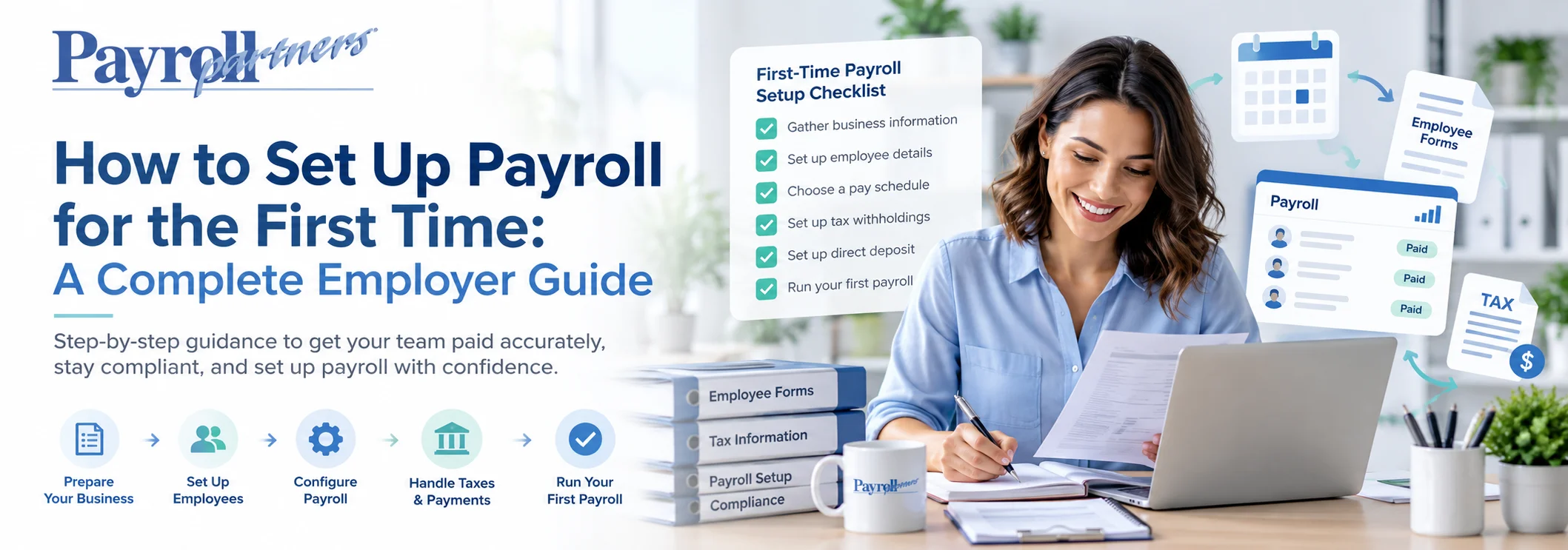
Starting payroll does not have to mean building every process from scratch. Payroll Partners can help organize employee setup, payroll processing, tax filings, timekeeping, HR, and benefits into a system that is easier to manage from the first payday forward.
What makes enterprise payroll scalable?
Scalable payroll can handle added employees, locations, pay types, approvals, and reporting requirements without requiring proportionally more manual work. The process should remain consistent, visible, and manageable as complexity increases.
When should a growing company upgrade its payroll process?
Consider an upgrade when payroll takes longer each cycle, manual corrections are increasing, reporting is difficult, or the system cannot easily support additional locations or pay structures. Those are signs that the current process may no longer fit the organization.
What should I look for in Large Business Payroll Services?
Look for reliable processing, clear tax-filing responsibilities, useful reporting, secure employee access, responsive support, and the ability to scale with additional employees or locations. The service model should also define what the provider handles and what the employer continues to oversee.
Does using a Large Payroll Processing Company remove employer tax responsibility?
Generally, no. The IRS states that employers usually remain responsible for federal employment tax obligations when payroll duties are outsourced, although responsibility can vary under certain third-party arrangements. Employers should continue reviewing payroll reports, deposits, and notices.
Can Corporate Payroll Processing Services support multi-location growth?
They can, depending on the provider and service scope. Businesses with multiple locations should confirm that payroll reporting, approvals, employee access, and applicable multi-state requirements can be supported before implementation.