

To choose a payroll company, compare more than software features. Look for accurate processing, clearly defined tax-filing responsibilities, useful reports, secure access, responsive human support, transparent pricing, and a service model that grows with your workforce. The best fit is the provider whose process matches your payroll frequency, complexity, and support needs.
Choosing a local small business payroll company can seem like comparing similar lists of features. Most providers calculate payroll, produce reports, and offer direct deposit. The distinctions become clearer when something unexpected happens: an employee starts mid-period, a tax notice arrives, a manager needs a custom report, or the company adds another location.
The best payroll provider comparison focuses as much on process and support as on software. A small business owner should understand who will help, how payroll is reviewed, what is included in the price, and how the provider handles tax filings, notices, security, and growth.
Table of Contents
- What should you look for in a payroll company?
- Does the provider offer real payroll support or only software?
- How should payroll pricing be explained?
- What payroll reports should a provider offer?
- How should a payroll company handle tax filings and notices?
- What security and access controls should you ask about?
- What questions should you ask before switching providers?
- Choose Payroll Support With Confidence
- Choose Payroll Support With Confidence
- Frequently Asked Questions
- External Research & Authority Sources
What should you look for in a payroll company?
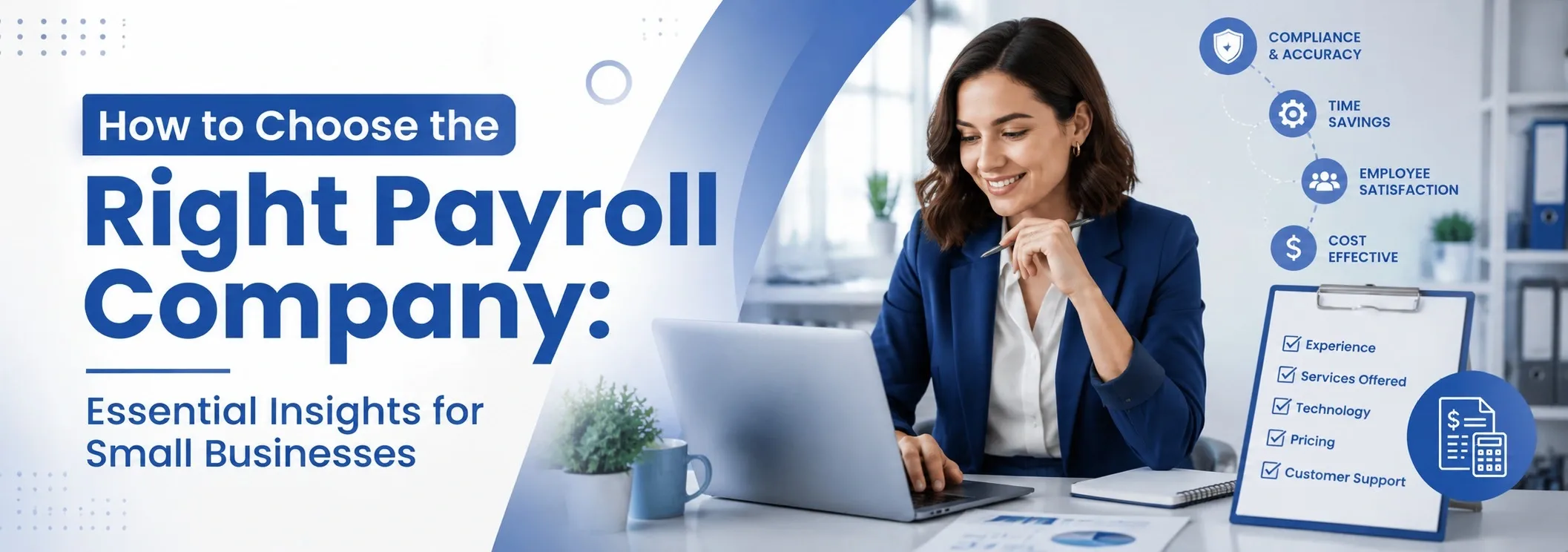
Start with the basic concepts. The provider should have a dependable process for collecting payroll information, calculating pay, applying deductions, producing reports, and completing the tax tasks included in the service. Here are some of the key qualities of a reliable payroll company:
- Accurate recurring payroll processing.
- Clear division of responsibilities between employer and provider.
- Responsive support for payroll questions and exceptions.
- Useful employer and employee reporting.
- Secure access to payroll data.
- A pricing model the business can understand before implementation.
- Capacity to support growth in headcount, locations, or complexity.
Does the provider offer real payroll support or only software?
Some payroll products are primarily self-service platforms. Some combine software with payroll professionals who help with setup, processing, exceptions, and questions. Both approaches are equally effective, but employers should know which one they are buying.
Ask whether you will have a dedicated contact, a general support line, or both. Find out how urgent payroll problems escalate and what happens if your normal contact is unavailable. Individual support matters most when the issue doesn’t fit a standard software workflow.
How should payroll pricing be explained?
Payroll pricing should be clear enough for employers to estimate their regular monthly or per-payroll costs and understand any additional charges for setup, year-end services, or special requests. Avoid choosing a provider based only on the lowest advertised price. Consider the full cost of the services your business needs. Here are 10 key payroll costs you need to consider:
- Base Payroll Processing Fees
- Per-Employee or Per-Paycheck Charges
- Payroll Setup and Implementation Fees
- Year-End Tax Form Fees (W-2s and Other Forms)
- Off-Cycle Payroll and Correction Fees
- Payroll Tax Filing and Multi-State Fees
- Optional Payroll Services and Integrations
- Direct Deposit and Payment Processing Fees
- Additional Reporting and Customization Fees
- Additional Employee or Business Location Fees
What payroll reports should a provider offer?
At minimum, employers should be able to review a payroll register and year-to-date employee information. Some businesses also need tax-liability reports, department or location summaries, deduction reports, labor-cost reports, and access to prior payroll history.
Ask to see sample reports during the sales process. A report can exist on a feature list and still be difficult to use. The real test is whether managers find the information they need without exporting data and rebuilding the report manually every pay period.
How should a payroll company handle tax filings and notices?
The provider should explain exactly which returns it prepares, which taxes it deposits or pays, and how the employer verifies completion. Notice handling is equally important.
Ask where IRS or state notices should be sent, who reviews them, what documentation the provider needs, and whether notice assistance is included or separately billed. The employer should retain access to reports and correspondence even when the provider handles the filing work.
What security and access controls should you ask about?
Payroll data includes sensitive information such as Social Security numbers, employee wages, home addresses, bank details, and tax records. Employers should understand how a payroll provider protects this information, controls user access, and handles data transfers. Ask about the provider’s security policies and procedures before sharing sensitive business or employee information. Here are 10 important security and access controls to consider:
- Role-Based User Permissions: Access levels for owners, managers, payroll staff, and employees.
- Secure Data Transfers: Safe methods for submitting payroll information and bank details.
- Employee Self-Service Access: Employees should only be able to view their payroll information.
- Administrative Activity Logs: Records of important account changes and user activities.
- User Access Management: Clear procedures for adding, updating, and removing users.
- Multi-Factor Authentication (MFA): Additional identity verification when accessing payroll accounts.
- Data Encryption: Protection of sensitive information during transfer and storage.
- Data Backup and Recovery: Procedures for protecting and restoring payroll information.
- Security Incident Response: A clear process for reporting and handling data breaches or security incidents.
- Data Retention and Privacy Policies: Clear rules for storing, accessing, and securely disposing of employee information.
Can the payroll service grow with your business?
A small business starts with a simple weekly or biweekly payroll and later adds departments, locations, multiple states, bonuses, garnishments, or different approval layers. Ask how the system and service model handle those changes.
If you are searching for a small business payroll company near me in Florida, local accessibility can be valuable, but location does not replace these core criteria. A nearby provider is useful only if the service model fits your business.
What questions should you ask before switching providers?
A provider that answers the following questions clearly is simpler to evaluate than one that relies on broad guarantees. The goal is not to find a small business payroll provider with the most features. It is to find the company whose process, support, and responsibilities fit your business. Here are 10 important questions you need to ask a provider before hiring:
- Who will be my primary point of contact?
- How are payroll changes submitted and approved?
- Who handles tax notices and corrections?
- Which reports are included?
- What does implementation include?
- How is year-to-date payroll reconciled during conversion?
- Are year-end forms included or separately priced?
- What fees are additional?
- How are payroll and employee data returned if we leave?
- What is the backup support plan if my contact is unavailable?
Choose Payroll Support With Confidence
If you are comparing payroll providers, Payroll Partners can walk you through its process, reporting, support model, tax services, and implementation approach. Bring your employee count, pay schedule, current pain points, and growth plans so you can compare the service against what your business actually needs. Whether you have a small team or a growing workforce, Payroll Partners offers payroll solutions designed to support your changing business needs.
Make payroll easier with reliable processing, tax filing, and dedicated support. Talk to Payroll Partners about solutions that fit your business needs.
What is the best payroll service for a small business?
There is no single best service for every business; the right fit depends on employee count, pay frequency, tax jurisdictions, reporting needs, desired support, budget, and how much payroll work the business wants to keep internally.
What should I ask a payroll provider?
Ask who supports your account, what tax tasks are included, how notices are handled, which reports are available, how implementation works, how pricing is structured, and how the service scales with growth.
How difficult is it to switch payroll companies?
A switch is manageable with a documented cutover plan and accurate year-to-date payroll and tax data. Midyear conversions require careful reconciliation before the first payroll with the new provider.
Should I choose a local payroll company?
Local access is valuable when you prefer nearby support or a provider familiar with your region, but service quality, responsibilities, reporting, security, and scalability should still drive the decision.
Is payroll software enough without professional support?
It can be for businesses with simple payroll and sufficient internal expertise. Companies that need help with filings, exceptions, notices, implementation, or growth may benefit from a service model that includes human payroll support.
External Research & Authority Sources
- Internal Revenue Service, Third Party Payer Arrangements—Payroll Service Providers and Reporting Agents
- Internal Revenue Service, Publication 15 (2026), Employer's Tax Guide
- Internal Revenue Service, Employment Tax Recordkeeping
- U.S. Department of Labor, Fact Sheet #21: FLSA Recordkeeping Requirements
- Florida Department of Revenue, Reemployment Tax